
Understanding Nutrition Labels
One of the first steps towards healthy eating is knowing what you’re actually eating. It should be easy to make healthier choices for you and your family, but it can be daunting to understand the health claims, information panels and health stars on packaged foods. Reading food labels can help you make healthier choices.
ALDI is committed to responsible marketing. We aim to inspire you to make healthy food choices by providing accurate and transparent information through clear product labels. We’re proud to say that ALDI has been at the forefront of helping our customers make informed decisions about what they eat.
In 2025, 53.5% of In-Scope products achieved a Health Start Rating (HSR) of 3.5 stars or higher.
How to read nutrition labels
Educating yourself on how to read nutrition labelling will help you make those informed choices for you and your family. We have our own Front of Pack Labelling policies and various brand guidelines to ensure you can easily access nutrition labels. You’ll usually find the nutrition information panel on the back or on the side of packaged foods. But how do you read them? We’re glad you asked, and it’s easier than you think, so let’s break it down.
Understanding how to read food labels
There are three key components to look for on every food label at ALDI – the ingredients list, the nutritional information panel and the health star rating. You can also find allergen labels on our products, where necessary (more on that later). The font may be small, but these resources are a big help when it comes to making healthy choices.
1. List of ingredients
All packaged food products have an ingredient list on their label, which is useful for knowing exactly what you are buying. You’ve probably read them many times before, but did you know that the ingredients are listed in order of prominence? So, if sugar is closer to the top of the list, then you know the product contains a larger amount of the sweet stuff.
2. Nutrition information panel
All the numbers and different measurements on a nutrition information panel can be overwhelming. We’re here to make it easy. Knowing how to read a nutrition label is useful for comparing products. First, let’s take a look at some of the common phrases you will see on the nutrition information panel:
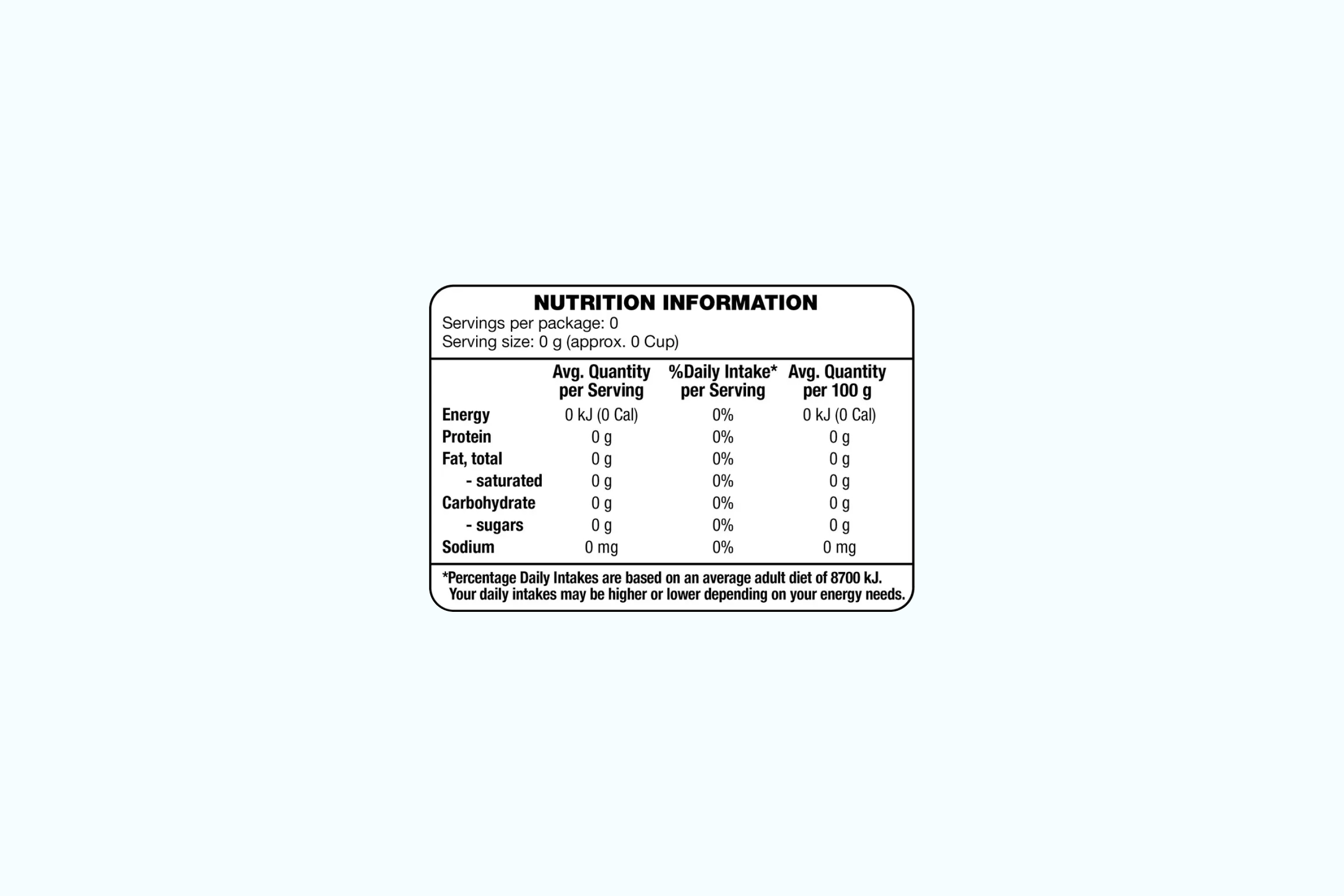
Serving size
This indicates the average serving size from the manufacturer, which isn’t necessarily the same thing as the recommended serving size.
Energy
This refers to the total amount of kilojoules that are released when the food product is used by the body.
Fat
This indicates how much fat is in the product per single serve. If you are comparing two products, choosing the one with less saturated fat can be a quick way to make a healthy choice. Where a product makes a Low-Fat claim, this means the contains less than 3g of fat per 100g. Fat Free claims can only be used for products that have less than 0.15% fat.
Carbohydrate
Total carbohydrates includes both sugars and starches. Use the ‘per serve’ column to work out how many carbs are in the product.
Sodium
This tells you how much salt is in the product. As sodium can affect blood pressure, choosing products that have less salt is generally a healthier option.
Dietary Fibre
Dietary fibre is usually included in the Nutrition Information Panel when a fibre claim is made on the products. For example, if a products claims to be High Fibre, the product must contain at least 3g of fibre per average serving to be considered high in fibre.
For more information on Nutritional Information Panels, from Food Standards Australia, see here.
3. Health Star Rating
Another type of food label you might have seen before is the Health Star Rating, a front-of-pack labelling system that rates the overall nutritional profile of packaged foods. It’s a quick and easy way for you to compare the nutritional profile of similar packaged foods and help you make more informed and healthier choices. The Health Star Ratings are calculated using strict guidelines.
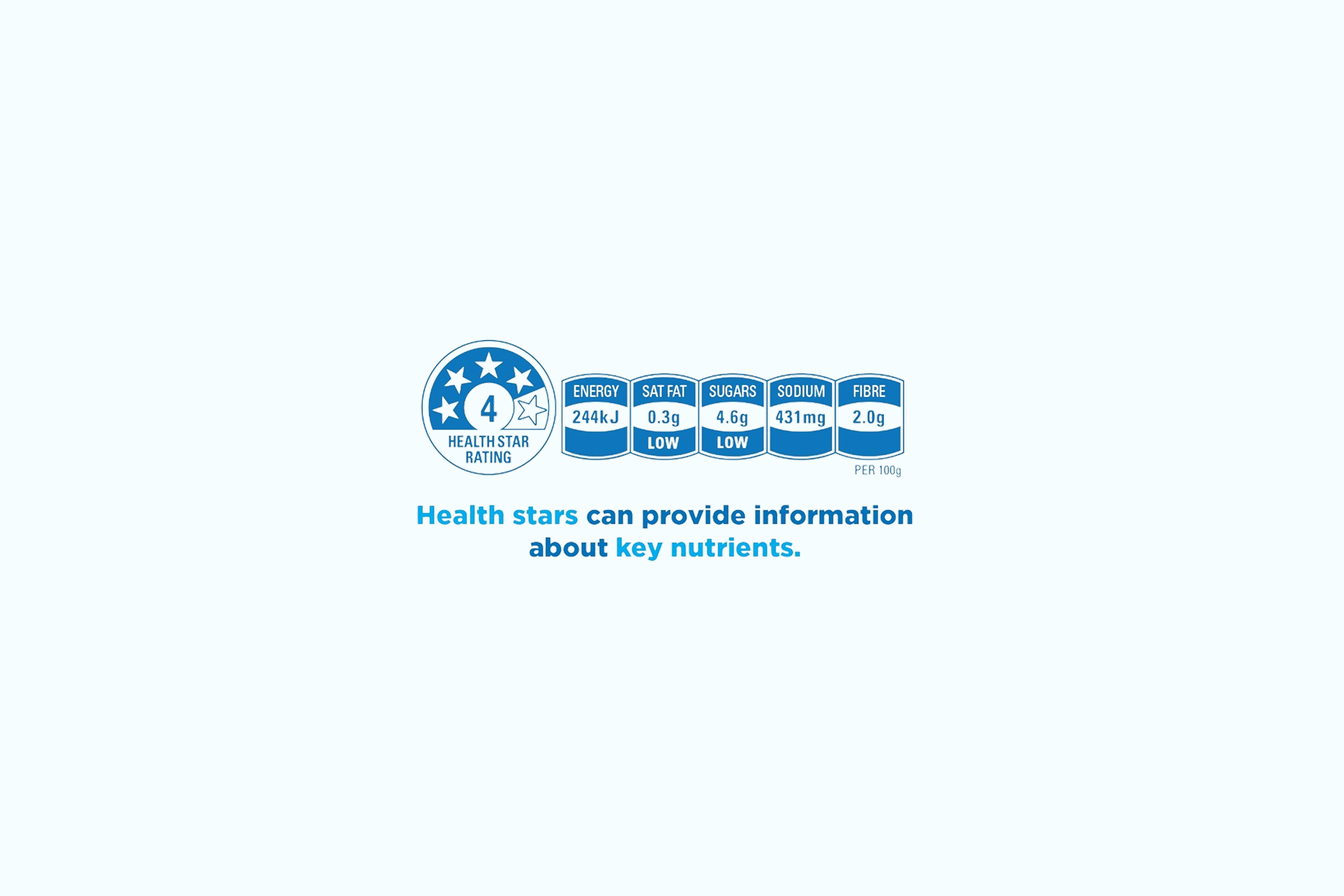
The system works by weighing up all the good stuff like fibre, protein, fruit, veg, nuts and legumes against the not so good stuff like sugar, salt and saturated fat. From there, the entire nutritional profile of the product is given an overall rating, ranging from half to five stars. The more stars you see, the healthier the choice. To learn more, visit www.healthstarrating.gov.au.
For a visual explanation of the Health Star Rating, take a look at this animation.
4. Nutrition and Health Claims
Nutrition content claims are claims about the content of certain nutrients in the product. Health claims refer to a relationship between a food and health. For example, ALDI partnered with the Grains & Legumes Nutrition Council (GLNC) in 2024 to commence the first Australian supermarket trialling the whole grain content logo on the front of selected product packaging. Choosing to eat whole grain products such as breads and cereals mean they retain the natural nutrients including fibre, vitamins and minerals which are often lost in refined grains. The front of pack whole grain logo’s clearly highlight the presence of wholegrains, helping customers to easily identify whole grain products and empower them to make more informed and healthier food choices.
The Grains and Legumes Nutrition Council is a not-for-profit health promotion charity. Being the knowledge centre on grains and legumes, GLNC educates and collaborates with partners to improve the health of all Australians.
ALDI’s Hillcrest® Muesli Clusters Nuts and Hillcrest® Muesli Clusters Berry now display whole grain content on pack, containing 53% and 66% whole grains respectively.
Food allergies and intolerances
A food allergy is an individuals immune response to normally harmless proteins in food that the allergic persons body responds to as harmful. Allergic reactions can vary in individuals, but in some cases can be severe or life-threatening, such as anaphylaxis where the respiratory and/or cardiovascular system of the allergic individual responds adversely. If a person is allergic to specific foods, the only way to manage the condition and prevent adverse reactions is to avoid the food.
A food intolerance, while also an adverse reaction, does not involve an immune response and may be related to ingestion of non-protein substances in food such as food additives. Symptoms of a food intolerance generally occur several hours after ingestion of a food and can include skin rashes, bloating, constipation and/or diarrhoea, headaches and other reactions.
Due to the prevalence of food allergies and intolerances in Australia, the Food Standards Code requires certain foods and substances to be declared when they are present in a food as ingredients including food additives or processing.
Any important allergen information will always be clearly marked on product labels. To give you extra peace-of-mind, ALDI carries out additional independent testing on products carrying allergen-free claims, so that they can be verified as safe for consumption.
If you are concerned you may have a food allergy or intolerance, please seek a diagnosis from your health care professional.
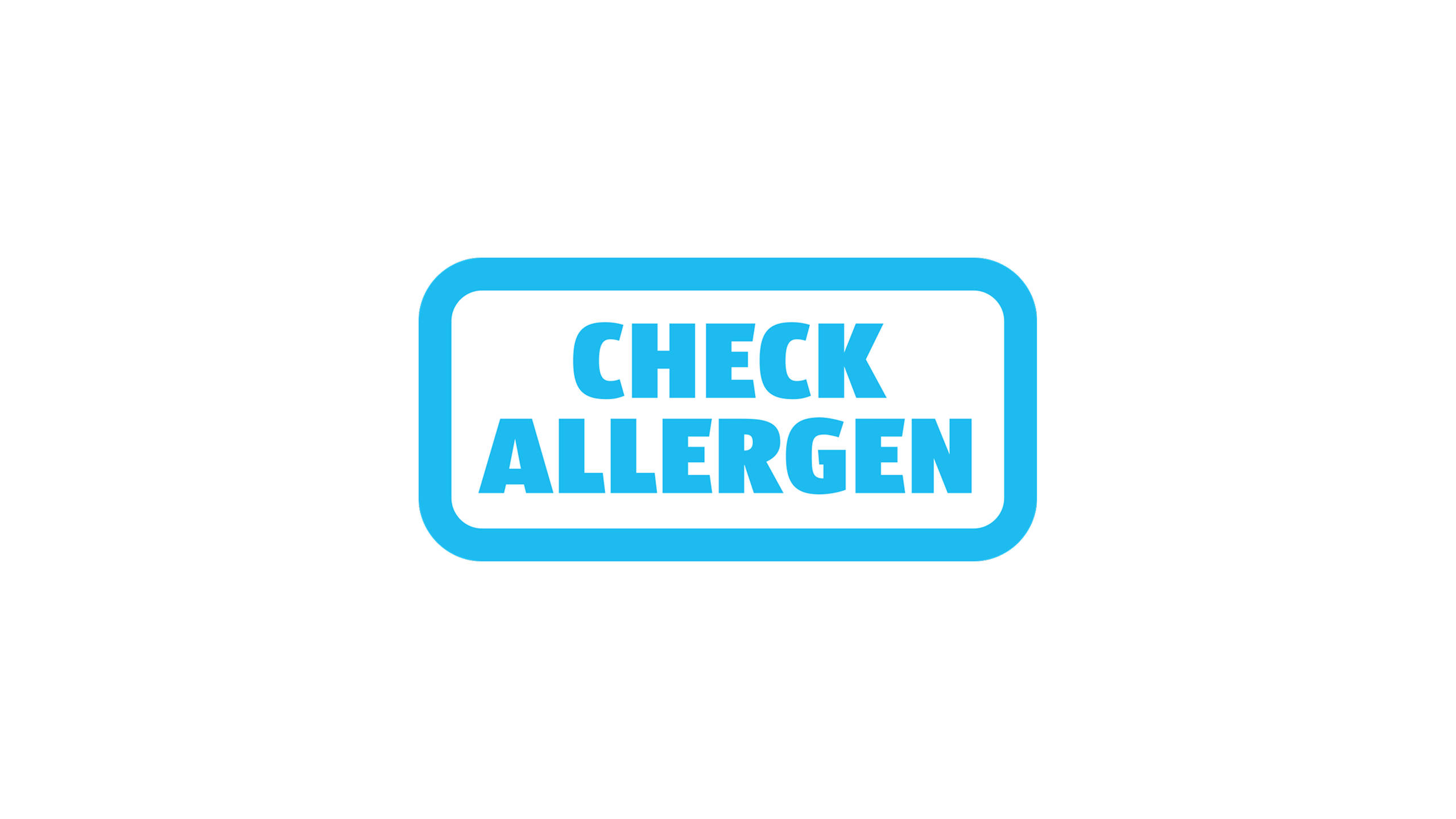
What is the ALDI ‘Check Allergen’ Icon?
While all our beloved ALDI Products are fully compliant with Australia’s Food Standards Code requirements for Mandatory Allergen Labelling, customers may notice the addition of a ‘Check Allergen’ Icon on ALDI-Branded Food & Beverage Products available in-store.
This icon has been added to visually communicate any changes in a products allergen status to our consumers, and is a prompt to always check the allergen statement printed on pack.
We encourage customers who have allergies to always read the ingredient list and allergen statements carefully on every product they consume.
Want more information?
Some useful resources to read if you want more information on food allergies and intolerances include:
- Welcome to Allergy & Anaphylaxis Australia
- Allergen labelling for consumers | Food Standards Australia New Zealand
- Patients - Australasian Society of Clinical Immunology and Allergy (ASCIA)
*Links to non-ALDI websites within this section have been provided for information purposes only. ALDI is not responsible for the content on those websites.
Making a Good Difference
Our efforts to Make a Good Difference aren’t going unnoticed – in a 2020 study conducted by Inside Our Food Companies, an assessment of the healthiness of Australian Supermarkets, ALDI Australia performed the best out of the top four retailers for Responsible Marketing.
For additional information on what kinds of foods and portions will Make a Good Difference to your health, check out the Australian Guide to Healthy Eating.